
WaterLove › Kite Flying
Kite flying weather, scored for your afternoon
WaterLove reads the National Weather Service forecast for your beach or your town, and scores every hour from 0 to 100 on how well it matches a day for flying a kite. Then it shows you why.
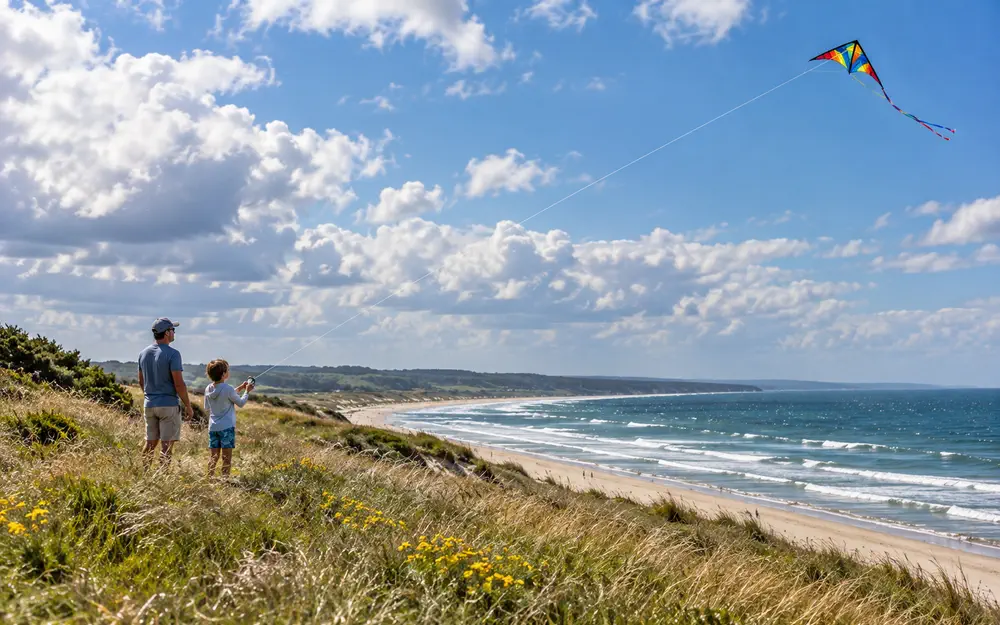
A kite needs wind
For kite flying, the wind counts for more of the score than anything else: calm air and strong wind both score less, and a steady breeze scores highest. Steadiness counts too: what matters is how far the gusts rise above the average. How warm it feels, the chance of rain and the air quality count as well.
What WaterLove reads for kite flying
The factors that count, and which way each one leans. In the app, every score shows what each factor added to it, and Preferences shows the comfortable range for each; with Premium you can set your own.
The average wind speed for the hour.
A steady breeze scores highest; calm air and strong wind both score less.
The strongest gusts the hour is forecast to bring.
Steadier wind scores higher: what counts is how far the gusts rise above the average.
How the air feels: the air temperature, or the heat index when humidity makes it feel hotter.
Comfortable warmth scores highest; cold and heat both score less.
The chance of rain in the hour.
A lower chance scores higher.
EPA AirNow's air quality index for the area, today and tomorrow; later days are scored without it.
Cleaner air scores higher.
Rules that come before the points
- Storms count hour by hour. The chance of a thunderstorm caps that hour's score before a window is averaged, so one stormy hour cannot hide inside a calm afternoon. The higher the chance, the lower the cap.
- Warnings come first. Some National Weather Service alerts for your place, such as a Severe Thunderstorm Warning or a Heat Advisory, hold kite flying at Poor match, and the alert is shown in the Weather Service's own words; some others are shown on the result as a caution and leave the score as it is. WaterLove is not an emergency-warning service and may not display every warning or hazard affecting a location. Always check official warnings and local guidance.
- Unhealthy air. When EPA AirNow's air quality index for your area is Unhealthy for Sensitive Groups or worse (its forecast for today or tomorrow, or its latest reading for the hour in progress), WaterLove holds kite flying at Poor match until you choose to see the score. That is WaterLove's rule on EPA's number, not an EPA alert.
- Storm chance. A high chance of a thunderstorm holds kite flying at Poor match, because a kite line reaches for the sky.
- Daylight is a rule, not points. Tell WaterLove whether you go out after dark, and hours outside your choice are left out.
- Your limits are yours. With Premium, set a limit of your own, such as wind above 15 mph, and every hour past it shows Poor match.
On the beach and in town
Kite flying is scored at beaches and open shores, where the wind is steadiest, and in your own town.
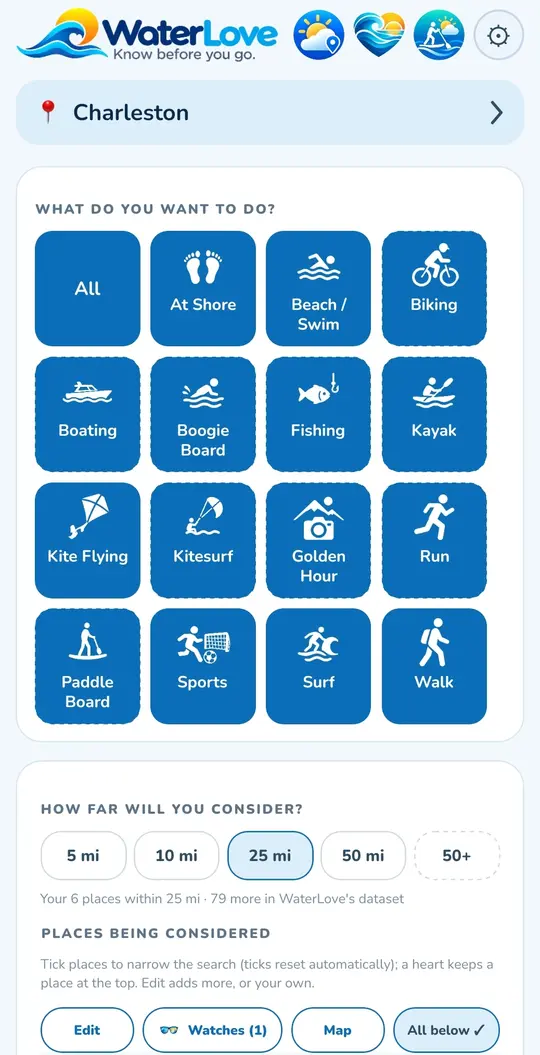
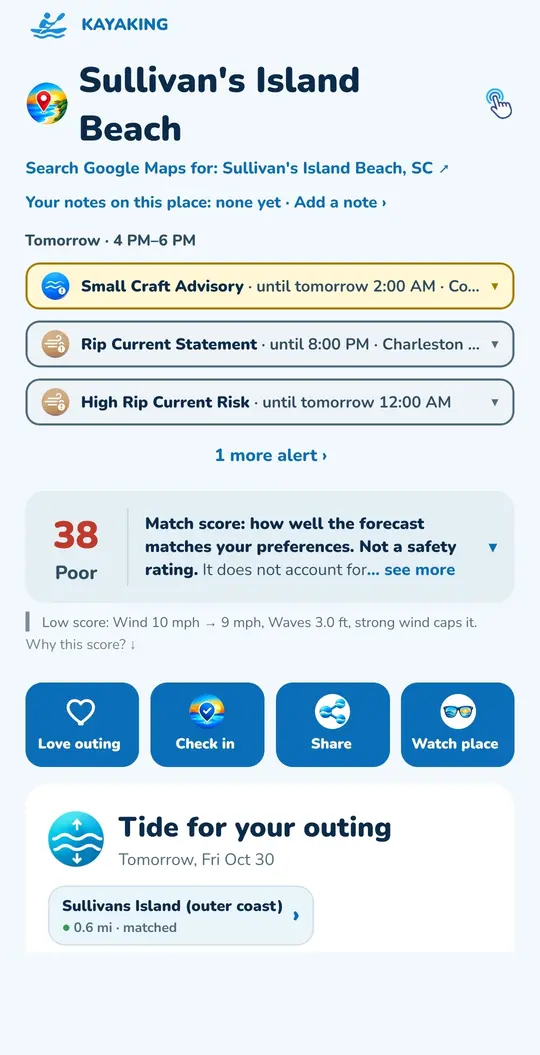
See it
Questions
What wind does a kite need?
Enough to keep it up, and not so much that it pulls harder than you want to hold. WaterLove scores a steady breeze highest, and with Premium you can set the range yourself.
Is a high score permission to go?
No. WaterLove scores forecast conditions. It does not know local laws, closures, posted restrictions, power lines or park rules. Always check conditions yourself before you go.
Is WaterLove free?
Yes, to download and use, with every score and explanation. Premium, by subscription through Google Play, lifts the limits: all activities at once, seven days ahead, more places. Free and Premium.

WaterLove provides planning guidance, not a safety certification. Always check the latest weather forecast and severe-weather and marine warnings before heading out. Conditions can change quickly.